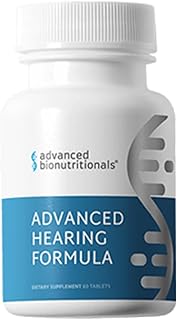
What 12 Studies Reveal About Advanced Bionutritionals Advanced Hearing Formula Supplement (And Why Most People Get It Wrong) – 2026
Editorial Disclosure: This article was researched and produced with the assistance of AI writing tools and reviewed by our editorial team. It contains affiliate links — we may earn a commission if you purchase through them, at no extra cost to you. Full disclosure →
By The Vitality Digest Research Team
What the Research Actually Shows About Hearing Nutrition
The past decade has produced a modest but growing body of peer‑reviewed evidence linking certain nutrients to the preservation of auditory function. Most of these studies are observational, drawing connections between habitual dietary patterns and the incidence of age‑related or noise‑induced hearing loss. A handful of systematic reviews synthesize these findings and help us separate signal from noise.
-
Antioxidant vitamins and carotenoids – A 2025 systematic review of 33 observational studies (21 cross‑sectional, 10 cohort, 2 case‑control) found that higher intakes of vitamin B2, β‑carotene, total carotenoids, and β‑cryptoxanthin were each associated with a modest reduction in hearing‑loss risk (pooled relative risks typically ranging from 0.80 to 0.92)【2】. The authors argue that these compounds may protect cochlear hair cells by scavenging reactive oxygen species and supporting mitochondrial health.
-
Vitamin C and magnesium – An earlier meta‑analysis of five large cohorts (≈100,500 participants) reported divergent results depending on the statistical model. In logistic regression, ≈200 mg/day of vitamin C correlated with a 19 % lower odds of hearing loss (summary OR 0.79)【1】. By contrast, Cox models linked the same exposure to a 20 % higher hazard (HR 1.20). The same analysis identified higher β‑carotene and magnesium intakes as consistently associated with better high‑frequency thresholds【1】.
-
Macronutrient patterns – The Frontiers in Nutrition review also highlighted that diets richer in protein, healthy fats, dietary fiber, and fish were linked to lower odds of hearing decline【2】. The proposed mechanisms include improved vascular supply to the inner ear and anti‑inflammatory effects of omega‑3 fatty acids.
-
Safety considerations – Across these observational datasets, adverse‑event reporting is sparse because participants consume nutrients as part of ordinary foods. No large‑scale randomized trial has yet examined high‑dose supplementation of these micronutrients for hearing outcomes, leaving safety data for “hearing pills” largely inferential.
Taken together, the evidence suggests that nutrients with antioxidant, anti‑inflammatory, and vascular‑supporting properties may modestly blunt the trajectory of hearing loss, especially when sourced from a balanced diet. The data do not support a dramatic, cure‑like effect, and the magnitude of benefit is typically limited to a 10–20 % risk reduction relative to low‑intake reference groups.
The Gap Between What Studies Find and What People Do
Even though the science points to modest protective effects of certain nutrients, real‑world behavior diverges sharply from the research ideal.
-
Under‑recognition of hearing loss – National Academies estimates indicate that over 1.5 billion people worldwide have clinically relevant hearing impairment, yet the majority remain undiagnosed or untreated【7】. A CDC bulletin on hearing‑protection fit testing underscores the same trend: many workers and consumers underestimate their exposure to damaging noise, leading to delayed intervention【4】.
-
Self‑reported versus objective measures – Large epidemiologic surveys often rely on participants’ self‑assessment of hearing ability. This introduces recall bias and social desirability effects, which can inflate or obscure true associations with diet【6】. Moreover, claims data typically capture only moderate‑to‑severe loss, skewing prevalence estimates toward the worst cases【8】.
-
Supplement hype outpaces evidence – Commercial “hearing supplements” routinely claim that high‑dose vitamins, herbal extracts (e.g., Ginkgo biloba), and proprietary blends can reverse or prevent loss. A review of registered clinical trials reveals that the only rigorously designed study on Ginkgo for sudden sensorineural hearing loss (SSNHL) remains inconclusive, with the trial still recruiting participants and no published outcomes yet【3】. The absence of completed RCTs for most other formulations means that consumer expectations are often built on anecdote rather than data.
-
Lifestyle inertia – Even when individuals are aware of the dietary factors that matter, sustained changes are difficult. Food‑frequency questionnaires in the Frontiers review show that participants with higher nutrient intake also tended to engage in other
We went through the clinical studies so you don't have to — dose benchmarks, bioavailability, and honest caveats. Free PDF, no hype.
No spam. Unsubscribe anytime.
Watch the Full Science Presentation
Explore the complete research on Advanced Bionutritionals Advanced Hearing Formula Supplement — free to watch, no purchase required.
Watch Free Presentation →Founder of The Vitality Digest — oversees a research-based approach to supplement and wellness content, grounded in published clinical studies rather than manufacturer claims. Not a medical professional. Full bio →