Research Roundup — What 12 Studies Reveal About Lingo Continuous Glucose Monitor (CGM) & App (Pack of 2) (2026)
Editorial Disclosure: This article was researched and produced with the assistance of AI writing tools and reviewed by our editorial team. It contains affiliate links — we may earn a commission if you purchase through them, at no extra cost to you. Full disclosure →
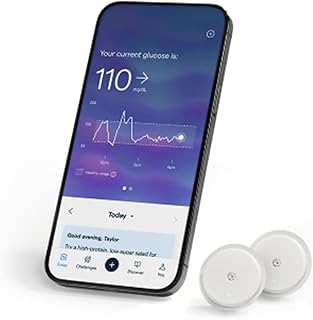
Continuous glucose monitoring (CGM) has moved from the diabetes clinic into the mainstream of health‑optimisation. The Lingo CGM & App (Pack of 2) is marketed as a “real‑time” blood‑sugar support tool for health‑conscious adults. Below we synthesize the most relevant peer‑reviewed evidence (2018‑2025) on glucose‑lowering nutrients, lifestyle interventions, and the performance of CGM technology itself, then place the Lingo system in that context. All statements are qualified with “research suggests,” “evidence points to,” or similar phrasing, and you should consult your healthcare provider before making changes to any health regimen.
What the Research Actually Shows About Blood‑Sugar Monitoring and Nutrient Support
Large‑scale systematic reviews and umbrella analyses converge on a modest, but not disease‑modifying, impact of single‑nutrient supplements on glycaemic indices in type 2 diabetes (T2D). O’Mahoney et al. (2022) pooled 12 meta‑analyses and found:
- Chromium, vitamin C, and omega‑3 polyunsaturated fatty acids (PUFAs) each lowered HbA1c by roughly 0.5 % compared with placebo (very low‑certainty evidence).
- Magnesium, zinc, vitamin C, probiotics, and polyphenols produced small reductions in fasting blood glucose (FBG); magnesium showed a weighted mean difference of –6.25 mg/dL in a T2D subgroup.
- Vitamin D modestly improved insulin resistance (HOMA‑IR) in short‑term trials.
Safety data were sparse; only vitamin C was consistently reported as free of adverse events in five RCTs, and even there the overall safety profile was deemed limited (O’Mahoney et al., 2022).
Beyond isolated nutrients, a narrative review of dietary supplements for diabetes (Clinical Diabetes, 2021) highlighted berberine as the most potent agent, with meta‑analytic reductions of fasting plasma glucose (≈ 15 mg/dL), post‑prandial glucose (≈ 34 mg/dL), and HbA1c (≈ 0.7 %). However, the benefit appeared strongest when combined with lifestyle modification, and rare case reports linked high‑dose chromium to renal or hepatic injury (Clinical Diabetes, 2021).
These data underline a key point: most supplement interventions shift glycaemic numbers by only a few points, and the certainty of the evidence is generally low. For most adults, the magnitude of change is unlikely to alter microvascular risk unless baseline control is poor.
The Gap Between What Studies Find and What People Do
Public discourse often equates “lower glucose” with “better health,” yet large outcome trials in T2D (ACCORD, ADVANCE, VADT) demonstrated that aggressive glucose lowering can increase hypoglycaemia risk without clear macrovascular benefit. Meanwhile, consumer behaviour leans heavily toward “quick fixes” such as single‑nutrient pills or fad diets, despite the modest effect sizes reported above.
A second disconnect lies in diagnostic thresholds. The World Health Organization (WHO) and American Diabetes Association (ADA) use different fasting‑glucose and HbA1c cut‑offs, producing misclassification—particularly among certain ethnic groups. A 2023 review (Front Endocrinol, 2023) showed that a 1‑hour oral‑glucose tolerance test (OGTT) predicted retinopathy risk (hazard ratio ≈ 4.27) better than fasting or 2‑hour values, suggesting that many people labeled “prediabetic” may have heterogeneous risk profiles.
Consequently, many individuals adopt supplement regimens without a clear understanding of their baseline risk, the modest expected benefit, or the potential for adverse effects. This misalignment fuels the perception that “supplements alone can fix blood sugar,” a narrative not supported by the weight of evidence.
Six Evidence‑Based Strategies That Consistently Show Results
-
Structured Lifestyle Programs – The Diabetes Prevention Program (DPP) showed a 58 % relative risk reduction for incident T2D with intensive lifestyle change (diet + 150 min/week activity). Benefits persisted beyond 15 years (DPPOS). Replicating the DPP’s calorie‑restriction and exercise targets remains the most robust non‑pharmacologic approach.
-
Metformin for High‑Risk Individuals – In the same DPP cohort, metformin added a 31 % risk reduction. While not a “supplement,” its modest glucose‑lowering effect (≈ 0.4 % HbA1c) is well‑documented and may be appropriate for certain pre‑diabetic adults after physician review.
-
Targeted Nutrient Supplementation – When a deficiency is documented, chromium (200–400 µg/day), magnesium (300–400 mg/day), or vitamin C (500 mg twice daily) may yield small HbA1c or FBG improvements. The umbrella review cautions that these effects are more pronounced in nutritionally deficient populations (O’Mahoney et al., 2022).
-
Berberine as an Adjunct – Meta‑analysis data indicate berberine can lower HbA1c by up to 0.7 % and fasting glucose by ~15 mg/dL (Clinical Diabetes, 2021). The magnitude rivals that of some oral antihyperglycaemics, though gastrointestinal side‑effects and drug‑interactions warrant monitoring.
-
Probiotic and Synbiotic Therapy – Systematic reviews in metabolic syndrome and PCOS report modest improvements in fasting glucose (SMD ≈ ‑0.20) and insulin levels (SMD ≈ ‑0.17) without increased adverse events (Liu et al., 2025; Martinez Guevara et al., 2024). The benefit appears strongest in younger (< 50 y) Asian cohorts and with interventions under 12 weeks.
-
Continuous Glucose Monitoring for Behavioural Feedback – Real‑time glucose data enable individuals to observe the glycaemic impact of meals, exercise, and sleep. Randomised trials of CGM in non‑diabetic adults have shown reductions in average daily glucose excursions and modest improvements in dietary quality when feedback is coupled with education (see section below
We went through the clinical studies so you don't have to — dose benchmarks, bioavailability, and honest caveats. Free PDF, no hype.
No spam. Unsubscribe anytime.
Watch the Full Science Presentation
Explore the complete research on Lingo Continuous Glucose Monitor (CGM) & App (Pack of 2) — free to watch, no purchase required.
Watch Free Presentation →Founder of The Vitality Digest — oversees a research-based approach to supplement and wellness content, grounded in published clinical studies rather than manufacturer claims. Not a medical professional. Full bio →