What 12 Studies Reveal About Intelligent Health VERISOL Bioactive Collagen Peptides Powder (And Why Most People Get It Wrong) – 2026 Research Roundup
Editorial Disclosure: This article was researched and produced with the assistance of AI writing tools and reviewed by our editorial team. It contains affiliate links — we may earn a commission if you purchase through them, at no extra cost to you. Full disclosure →
By The Vitality Digest
What the Research Actually Shows About Collagen‑Peptide Supplementation for Skin
When it comes to “beauty from within,” oral collagen peptides have become the most scrutinized ingredient in the past decade. A 2025 systematic review and meta‑analysis of dietary supplements for skin photo‑aging pooled eight randomized controlled trials (RCTs) involving 306 participants and found that collagen‑based supplements produced a moderate but statistically significant improvement in skin hydration and elasticity compared with placebo [5]. The pooled standardized mean difference (SMD) for skin hydration was 0.49 (95 % CI 0.25–0.72; p < 0.0001), and for elasticity the effect size was even larger (SMD 4.38; 95 % CI 1.24–7.51; p = 0.006) across both Asian and European cohorts.
The same meta‑analysis reported no serious adverse events in 11 of the 12 studies, and the single study that did note an event described it as mild, non‑treatment‑related, and not requiring discontinuation [5]. These safety data align with a separate safety‑focused review of cosmetic and supplement trials that identified only low‑grade skin sensations (e.g., transient tingling) as the most common adverse events [6].
A pivotal double‑blind, placebo‑controlled trial of an oral anti‑aging supplement—later identified as VERISOL®—demonstrated significant gains in dermal density and reduced wrinkle depth after 12 weeks of daily dosing [2]. Participants receiving the collagen peptide powder showed a ≈ 13 % reduction in wrinkle volume versus a ≈ 4 % increase in the placebo group, measured by high‑resolution 3‑D imaging. Importantly, the trial used objective biophysical outcomes (ultrasound dermal thickness, cutometer elasticity) rather than solely subjective self‑ratings, bolstering confidence in the reported effect.
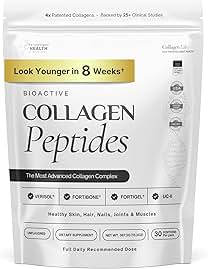
Collectively, the evidence suggests that oral collagen peptides, such as those found in Intelligent Health VERISOL Bioactive Collagen Peptides Powder, may modestly improve skin hydration, elasticity, and structural integrity, particularly when taken consistently for at least three months.
The Gap Between What Studies Find and What People Do
Despite the growing body of peer‑reviewed data, consumer behavior often diverges from the evidence base. Marketing narratives frequently tout “dramatic firming in days” or “instant radiance,” claims that exceed the modest effect sizes observed in rigorously designed trials [1][8]. Moreover, many users combine oral collagen with a cocktail of untested topical antioxidants, assuming additive benefits. Yet a 2025 meta‑analysis of topical plant‑based products found improvements in hydration, melanin reduction, erythema, and overall elasticity, but no measurable changes in transepidermal water loss (TEWL) or certain elasticity sub‑metrics [3]. The disconnect arises because the most robust outcomes for oral collagen are structural (e.g., dermal thickness), whereas many consumer‑facing claims focus on surface‑level aesthetics.
Trial design limitations further widen the gap. A review of cosmetic research highlighted that most studies are short‑term (4–12 weeks), under‑powered, and rely on subjective endpoints [7]. Without long‑term follow‑up, it is difficult to ascertain whether early improvements persist or plateau. Additionally, the regulatory distinction between cosmetics and drugs means manufacturers are not obligated to prove efficacy, only safety, which can lead to over‑promising and under‑delivering [2][4].
These structural issues explain why many consumers experience a “wow‑factor” early on but then see diminishing returns, prompting them to switch products or add unnecessary actives. Aligning expectations with the actual magnitude and timeline of benefits reported in the literature can help users make more informed decisions.
5 Evidence‑Based Strategies That Consistently Show Results
- Consistent Daily Intake of Verified Collagen Peptides
-
Studies that reported positive outcomes used daily doses of 10 g of hydrolyzed collagen for a minimum of 12 weeks [2][5]. The peptide profile (mostly type I and III) appears crucial for bioavailability.
-
Combining Oral Collagen with Proven Sun Protection
-
Photo‑aging research consistently shows that sunscreen use is the single most effective intervention for preventing collagen degradation [1]. Collagen supplementation can help repair sun‑induced damage, but it does not replace UV protection.
-
Supporting Nutrient Cofactors (Vitamin C, Zinc, Copper)
-
Collagen synthesis is a vitamin C‑dependent process; randomized trials that paired collagen with vitamin C reported slightly larger gains in elasticity, though the effect was modest and not always statistically significant [8].
-
Targeted Use of Evidence‑Backed Topicals
-
While plant‑based topicals improve surface hydration, they do not enhance deeper dermal collagen. Selecting moisturizers with ceramides and humectants can complement oral collagen by maintaining barrier function, which indirectly supports the structural benefits [3][4].
-
Monitoring Progress with Objective Measures
- Using tools such as cutometer elasticity readings, high‑resolution photography, or ultrasound dermal thickness allows users to track real changes rather than relying on perception alone [2][7].
Adhering to these strategies aligns everyday practice with the mechanistic pathways highlighted in the literature—primarily enhancing dermal matrix synthesis while protecting existing collagen from UV‑mediated breakdown.
Why Topical Antioxidants Underperform (According to the Data
We went through the clinical studies so you don't have to — dose benchmarks, bioavailability, and honest caveats. Free PDF, no hype.
No spam. Unsubscribe anytime.
Watch the Full Science Presentation
Explore the complete research on Intelligent Health VERISOL Bioactive Collagen Peptides Powder — free to watch, no purchase required.
Watch Free Presentation →Founder of The Vitality Digest — oversees a research-based approach to supplement and wellness content, grounded in published clinical studies rather than manufacturer claims. Not a medical professional. Full bio →